Iron Information
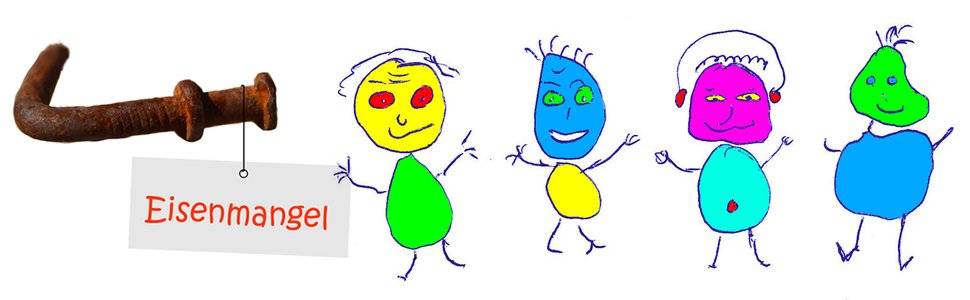
Iron deficiency has many faces
- Heart failure
- Iron-deficiency anemia
- Sleep disorders
- States of exhaustion
- Concentration difficulties
- Depressive mood
- Headaches
- Dizziness
- Neck tension
- Hair loss
- Brittle nails
- Restless legs syndrome
Iron plays a wide range of roles in the complex metabolism of the human body. Many people suffer from non-specific symptoms that significantly reduce quality of life. Anemia is only one of the last symptoms to appear.
Iron deficiency should be treated before heart failure or anemia develops.
Learn more about iron deficiency
Myoglobin formation
Oxygen must also be transported within muscle cells for cellular respiration. Similar to hemoglobin, which transports oxygen in the blood, myoglobin is responsible for oxygen transport in skeletal and heart muscle. Iron plays a crucial role as a binding site here as well, explaining why iron deficiency leads to rapid muscular fatigue.
Respiratory chain and energy production
In the cell’s power plants, the mitochondria, many chemical reactions take place to convert fats and carbohydrates into ATP, the cell’s energy currency. These reactions require enzymes, many of which are iron-dependent.
Blood formation
Iron is the binding site for oxygen in hemoglobin. If iron is lacking, oxygen transport capacity is reduced. This results in shortness of breath during exertion, reduced performance, palpitations, irregular heartbeat, and fatigue.
Interesting fact: Because blood formation is so vital, iron deficiency appears here as one of the last symptoms. Other iron-dependent processes may already be impaired long before.
Immune system
Many immune processes depend on an adequate iron supply. Increased susceptibility to infections is therefore common in iron deficiency.
Central nervous system
Weakness, dizziness, fatigue, as well as dementia-like symptoms and depressive moods are typical signs of iron deficiency.
Chronic inflammation
Chronic inflammation, especially in the gastrointestinal tract, can block iron absorption.
Medications
Various medications indirectly affect iron metabolism (e.g. ACE inhibitors and diuretics).
Hormone production
The production of hormones—chemical messengers in the body—is often dependent on iron. Thyroid hormones and dopamine, for example, are synthesized in an iron-dependent manner.
Connective tissue
The production of various connective tissue fibers—such as tendons, skin and mucous membranes, hair, and nails—depends on iron.
Screening
The simplest method is a blood test. Target values include, for example, ferritin > 100 µg/L and transferrin saturation > 20%.
Treatment options
Oral iron supplements are easy to take but are often poorly tolerated and frequently not very effective. Intravenous iron administration or iron infusions using modern formulations (e.g. iron carboxymaltose such as Ferinject®) are well tolerated and fast-acting, leading to a rapid improvement of symptoms.